← Blog · 2026-08-09
What cupping actually does — and when it is worth your time
Cupping is not magic and it is not useless. Here is what it is good at, what it will not fix, and how it fits with the strength work that holds it.
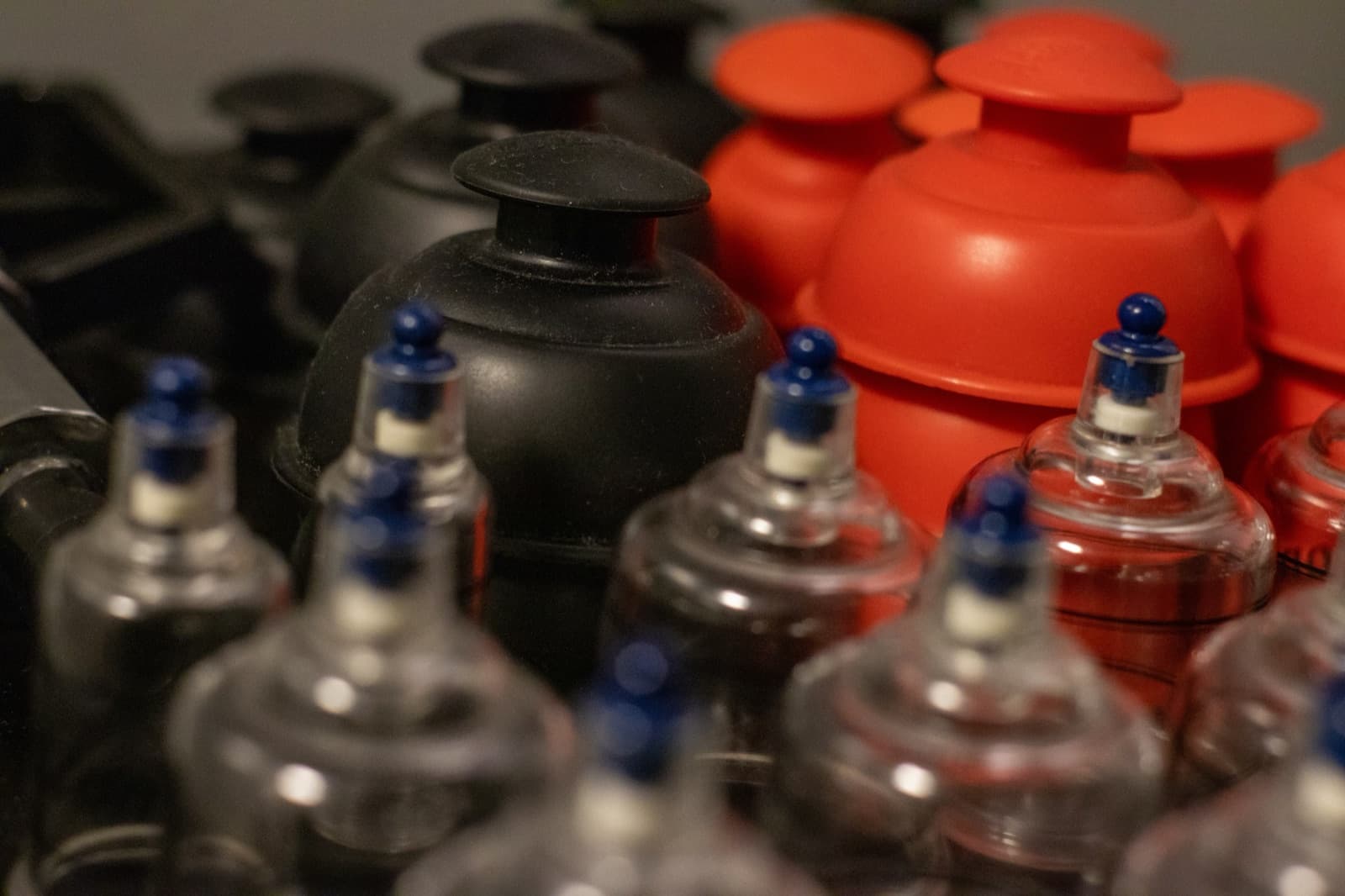
Cupping is the treatment people recognize before they understand it. The round marks show up on a swimmer or a lifter, someone asks about it, and the answer is usually either "it pulls out toxins" or "it is a placebo."
Neither is a good answer.
What it is actually doing
Cupping applies a sustained decompressive pull to skin and the tissue underneath it. Most manual work presses in. Cupping lifts.
That difference matters for two practical reasons. It changes how the layers of tissue glide against each other, and it changes what the nervous system feels in that area for a while afterward. Tissue that felt guarded often tolerates more range immediately after.
That window is the point.
What it will not do
It will not pull toxins out of you. It will not break up scar tissue on contact. It will not correct a movement problem that keeps reloading the same area every time you train.
The marks are not a measure of how much good it did, either. They reflect how surface capillaries responded to suction, which varies between people and between days. A darker mark is not a better treatment.
If cupping is the entire plan, the relief tends to fade by the next hard session.
Where it fits
We use cupping as a door opener, not a destination.
A typical sequence looks like this:
- Decompress the area so it tolerates more range
- Use that range immediately, with real movement
- Load it, so the nervous system has a reason to keep the change
Skip the last two and you have bought a few comfortable hours. Do all three and you have given the body a reason to hold the position you just gained.
That is the same logic behind pairing manual therapy with strength work — the hands-on piece creates an opportunity, and the loading makes it stick.
Who tends to benefit
In our experience it earns its place most often for:
- Lifters with upper back and lat stiffness that limits overhead position
- Cyclists and runners with a thoracic or hip region that feels locked between blocks
- Anyone in a training phase where soreness is outpacing recovery
It is less useful when the real issue is a capacity problem. If a tissue is failing because it is being asked to do more than it can currently handle, more decompression is not the answer. More capacity is.
The honest version
Cupping is a good tool with a narrow, real job: change how an area feels and moves for a short window so you can do better work inside it.
Judged that way, it is genuinely useful. Judged as a fix for the underlying problem, it will disappoint you.
If you are not sure whether it belongs in your plan, that is a reasonable thing to ask about during an assessment. The answer depends less on the technique and more on why the area is unhappy in the first place.